Standing under a vent and feeling warm air wash over your face is a special kind of letdown. Your shirt sticks, the kids turn cranky, and the dog flops on the tile in protest. I have stood in that hallway myself, so I know how fast a hot afternoon wears everyone down. Here is the part that helps.
Warm air from an AC almost always traces back to a short list of common causes. Even better, many of them cost little to fix and take just minutes to check. This guide walks you through each cause, plus the fixes that actually work. By the end, you will know exactly what to try and when to hand things off.
Check Your Thermostat Before Assuming AC Failure
The thermostat causes more warm-air panic than any broken part inside your AC. In fact, technicians fix a surprising share of cooling calls with two button presses. A fan switch set to ON keeps air moving even when the cooling cycle rests. As a result, the vents push room-temperature air that feels warm on a hot day. Someone may have bumped the mode to HEAT during a chilly week, too. Dead batteries can freeze the screen while the system sits idle.
So before anything else, run these quick checks:
- Set the mode to COOL and drop the target a few degrees below room temperature.
- Switch the fan from ON to AUTO so it only blows during cooling cycles.
- Swap in fresh batteries and give the screen a minute to reset.
- Keep lamps and direct sunlight away from the thermostat, since nearby heat skews its readings.
These steps cost nothing, yet they solve warm-air complaints in countless homes every single summer.
Fix Warm Air Fast By Replacing A Dirty AC Filter
Your filter quietly grabs dust, pet hair, and pollen all day long. Over time, that buildup packs into a thick gray mat that air can barely pass through. I once pulled a filter so caked it looked like felt, and the vents barely whispered. Weak airflow means less cool air reaches your rooms, so the house slowly warms up.
On top of that, a starved system strains its blower motor and runs longer than it should. Your energy bill climbs while your comfort quietly drops. Luckily, the fix costs around $10 to $20 at any hardware store. Check the filter monthly during summer, and replace it every 30 to 60 days. Homes with shedding pets often need a fresh one even sooner than that.
Frozen AC Coils That Stop Your Home From Cooling
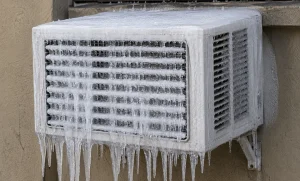
It sounds backward, yet ice inside an AC leads straight to warm air at the vents. The evaporator coil absorbs heat from your home as refrigerant flows through it. When airflow drops, or refrigerant runs low, that coil dips below freezing. Moisture in the air freezes onto it, and the ice grows layer by layer.
Before long, air passes over a frozen block and picks up almost no cooling at all. You might spot frost on the copper lines or water pooling near the indoor unit. At that point, turn the system off and run only the fan. Give the ice a full 24 hours to melt, and check your filter while you wait. If the coil freezes again, a refrigerant problem likely sits underneath, and that needs a trained tech.
Low Refrigerant Symptoms That Keep Your Home Hot
Refrigerant works like a delivery truck that hauls heat from inside your house to the outdoors. Here is a fact many homeowners never hear. Refrigerant does not get used up like gas in a car. So a low level always points to a leak somewhere in the sealed system. Watch for hissing sounds, ice on the copper lines, or cooling that fades over a few hours.
Longer run times and rising energy bills often show up as early clues, too. Topping off refrigerant without sealing the leak only buys a few weeks of relief. Beyond that, federal law requires EPA Section 608 certification to handle these chemicals. This one belongs to the pros, full stop.
Warm Air AC Problems And Quick Home Fixes
Sometimes a quick side-by-side view beats three pages of reading. Use this table to match what you notice at home with the likely cause and fix.
| Cause | What You Notice | The Fix | Cost or Time |
| Thermostat set wrong | Fan runs nonstop, air feels neutral | Switch to COOL and AUTO | Free, two minutes |
| Clogged filter | Weak airflow, dusty vents | Replace the filter | $10 to $20 |
| Frozen coil | Frost on lines, water dripping | Thaw for 24 hours, swap the filter | Free, one day |
| Low refrigerant | Hissing sounds, fading cool | Leak repair by a certified tech | Service visit |
| Dirty outdoor unit | Hot exterior air, loud running | Clear debris, rinse the fins | Free, 30 minutes |
| Leaky ducts | Warm rooms far from the unit | Seal gaps with foil-backed tape | Under $25 for tape |
| Tripped breaker | Indoor fan runs, outdoor unit silent | Reset once at the panel | Free, one minute |
Keep this chart handy, and you will spot patterns faster the moment trouble starts brewing.
A Dirty Outdoor AC Unit Can Restrict Heat Transfer
Your outdoor unit, called the condenser, releases all the heat pulled from inside your home. Grass clippings, leaves, and cottonwood fluff love to pack into its thin metal fins. Once those fins clog, heat gets trapped, and the system loses its cooling muscle. The unit runs louder, works harder, and sends lukewarm air through your vents. Meanwhile, your electric meter spins faster with nothing to show for it.
The cleanup takes about half an hour of easy work:
- Shut off power at the outdoor disconnect box before touching anything at all.
- Pull weeds and trim plants to leave two feet of open space on every side.
- Rinse the fins gently with a garden hose, spraying from the inside out when possible.
- Skip the pressure washer, since strong spray bends those soft fins like paper.
Afterward, restore power and give the system a full hour to catch back up.
Leaky Ducts Can Cause Your AC to Lose Cool Air Before It Reaches Your Rooms
Your ducts carry cooled air through attics and crawl spaces that bake all summer long. Attic temperatures can top 130 degrees on a July afternoon. Energy Star reports that leaky ducts waste 20 to 30 percent of the air moving through them. So your AC may cool just fine while your bedroom still feels muggy and warm.
Rooms far from the indoor unit usually feel it before the rest of the house. Look for dusty streaks near vents or ducts that hiss when the system runs. Foil-backed tape seals small gaps far better than standard cloth duct tape ever will. For bigger leaks, a duct sealing visit pays for itself through lower monthly bills.
Tripped AC Breakers And Worn Parts That Stop Cooling
Central AC systems usually run on two separate breakers, one indoor and one outdoor. When the outdoor breaker trips, the inside fan keeps blowing while cooling quietly stops. That mismatch creates the classic puzzle of steady airflow with zero chill. Head to your electrical panel and reset the tripped breaker one time only.
If it trips again, stop right there, because repeated trips signal a real fault. A worn capacitor often hides behind the trouble, especially during long heat waves. You might hear the outdoor unit hum while its fan refuses to spin. Electrical repairs carry shock risk, so leave the panel testing to a licensed tech.
Call An HVAC Pro When DIY AC Checks Are Done
Warm-air problems often start small, and now you hold a checklist that catches them early. A thermostat tweak, a fresh filter, or a quick rinse outside brings relief in many cases. Still, some fixes sit past the line where DIY should stop. Refrigerant leaks, electrical faults, and coils that keep freezing all call for trained hands.
That is where Pro Edge Services and Training earns its name. Our techs handle diagnostics, repairs, and honest advice without any upsell pressure. Reach out when your checks run out, and cool comfort returns sooner than you expect. Either way, you now understand your AC better than many homeowners ever will.
FAQs
Why does my AC blow warm air even though it runs all day?
An AC that runs without cooling usually points to a thermostat set wrong, a clogged filter, or low refrigerant. Frozen coils and duct leaks cause it as well. Work through the easy checks in order, starting at the thermostat. Call a certified technician if warm air continues past a full day.
Can a dirty air filter really make an AC blow warm air?
Yes, a clogged filter blocks airflow so severely that cool air never reaches your rooms. Restricted airflow can even freeze the evaporator coil, which makes everything worse. Replace the filter every 30 to 60 days during summer to keep air moving freely. That habit protects the system from costly strain-related damage.
How can I tell if my air conditioner is low on refrigerant?
Common signs include hissing near the copper lines, ice on the coils, and cooling that fades during long cycles. Rising energy bills often appear as well. Refrigerant never gets used up, so a low reading always means a leak somewhere. EPA rules require a certified technician to handle these repairs.
Is it safe to keep running an AC that blows warm air?
Running it briefly while you check the thermostat and filter causes no real harm. Running it for days, though, can strain the compressor and turn a small fix into a major repair. Shut the system down if you notice ice, burning smells, or repeated breaker trips, and schedule service promptly.
How often should an air conditioner get maintenance to prevent warm air problems?
One tune-up each spring keeps refrigerant levels, electrical parts, and coils in healthy shape before summer heat arrives. Between visits, replace filters every 30 to 60 days and rinse the outdoor unit twice a season. Together, these habits prevent nearly every warm-air surprise this guide walks you through.