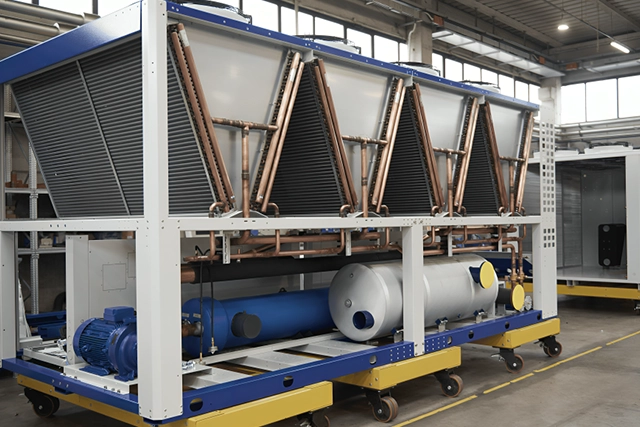
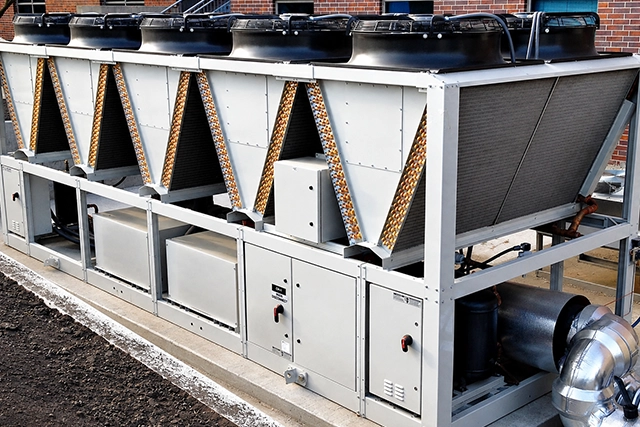
Dependable cooling starts with knowing how much heat the system must remove. In production plants, storage areas, medical sites, and large buildings, a poor chiller choice can affect output, equipment life, product quality, and normal operation. We plan chillers installation in Central Valley & Northern California, around measured demand, water temperatures, operating hours, and the conditions at your facility.
Pro Edge Services and Training installs systems that support process equipment, building cooling, product storage, and temperature-controlled work areas. On mixed-use sites, we also review how cooling needs connect across sales floors, display cases, deli areas, frozen-food sections, and back-room storage. The result is a plan based on your actual load, not a model selected from square footage alone.
Chiller sizing starts with the load your facility must handle. As part of our best chillers installation service in Central Valley & Northern California, we review current use, expected growth, operating schedules, indoor heat, process equipment, water temperatures, and control needs. This prevents undersized units from running constantly and avoids unused capacity.
Our work starts with these checks:
Daily load swings may change the recommendation. Existing pumps or piping may limit a new chiller. We explain these conditions before ordering equipment. Our careful demand review supports dependable performance, clear decisions, and a high-quality experience.
A chiller affects production, storage, equipment temperatures, and building use. Poor sizing, weak water flow, or incorrect controls can cause long run times, alarms, and uneven cooling. Our best chillers installation service in Central Valley & Northern California, connects each part correctly and confirms the system can meet your real operating demand.
By perfectly installing your chiller, you may enjoy these practical benefits:
We finish chillers installation in Central Valley & Northern California, with operating tests and clear records, giving your facility a dependable base for continued cooling.
Correct chiller selection helps equipment hold required temperatures without constant cycling. Stable water flow can support even cooling across the connected load. Clear controls also help staff respond sooner when readings move away from normal.
These results can reduce stopped work, rejected products, heat-related equipment strain, and rushed service decisions. Good access around pumps, panels, and strainers can shorten later checks. Starting records also give your facility team useful numbers for daily logs.
Our Oakdale chillers services cover new projects, equipment changes, repairs, and planned care. Call (209) 425-3880 to discuss the system type, required temperatures, site access, current symptoms, and project timing.
We separate base demand from short peak loads before selecting capacity. During chillers installation in Central Valley & Northern California, this helps us avoid equipment that cycles often or falls behind during production.
We check pump data, pressure drop, valve positions, and water flow before final startup. This confirms that the chiller can move cooling through the full piping loop.
We test how pumps, compressors, valves, alarms, and backup stages respond in order. You receive a clear startup record showing set points and observed operation.
The correct size depends on peak load, target fluid temperature, runtime, process heat, and future demand. We also check pumps, piping, electrical capacity, and equipment placement. A site review gives better guidance than square footage alone.
It may connect when flow rates, pipe sizes, valves, and pump capacity meet the new equipment requirements. Corrosion, restricted strainers, or poor insulation may require added work. We test key conditions before confirming reuse.
Provide the current model, required temperatures, connected equipment, operating hours, alarms, and recent repair records. Share available drawings, utility details, and expected production changes. This helps us prepare a useful first review.
Timing depends on equipment lead time, site preparation, piping changes, electrical work, controls, and shutdown limits. A direct replacement may take less time than a new system layout. We provide a project sequence after the site review.
A standard AC condensing unit cools air directly and serves one zone or a small building. A chiller cools water or glycol instead, then pumps that fluid out to serve multiple zones, processes, or buildings at once. That's what makes chillers the standard choice for larger or more complex cooling needs.

We keep heating, cooling, and refrigeration systems working perfectly for homes, restaurants, stores, and facilities. Our licensed team checks each system carefully, explains the cause, and completes approved work around daily schedules and operating needs.